
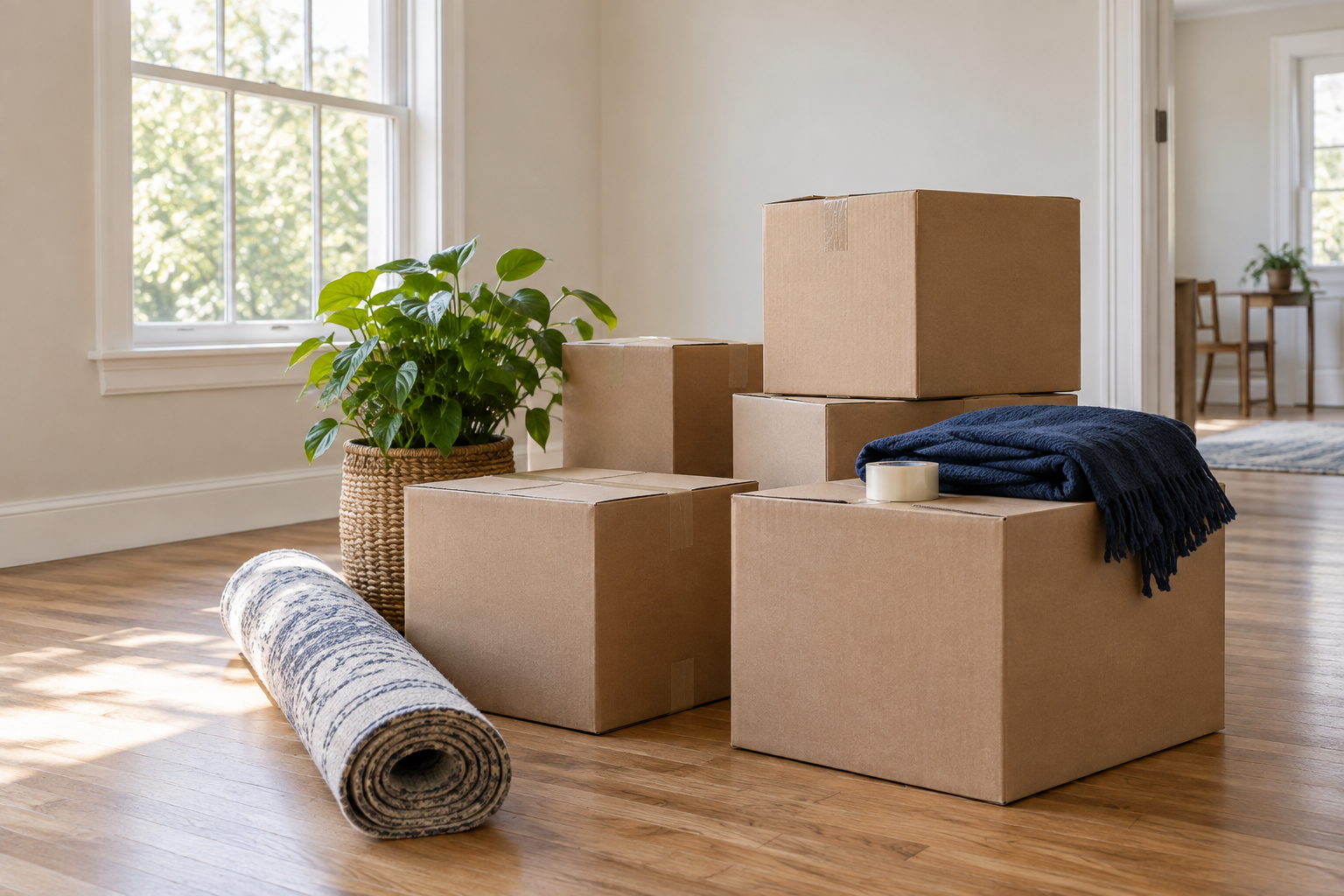
Moving day gets busy quickly. Someone needs the parking spot, your phone is somewhere in a box, and the kettle has already gone onto the truck. A short list helps you keep the essentials out of the shuffle.
Use this checklist as a starting point. Adjust it for your building, your household, and the arrangements you made with your moving company.
Pack the things you’ll need before you unpack.
Set aside a bag that travels with you. Think about the time between leaving your old home and opening the first box at the new one.
- Keys, wallet, phone, and a charger.
- Medication and any everyday essentials for children or pets.
- Drinking water, a snack, toilet paper, soap, and a hand towel.
- A change of clothes and anything you need for the first night.
Keep important documents and valuables with you. Put the bag somewhere clearly separate from the boxes going onto the truck, then tell anyone helping that it stays with you.
Give the crew a quick tour.
Before loading starts, walk through the home with the crew lead. Point out fragile items, furniture that needs disassembly, and anything that should stay behind. Show them the access route you agreed on.
Check the destination address and the best phone number to reach you. If you have a reserved elevator or a limited loading window, mention it before the first box moves.
A quick morning check
Use these checkboxes while this page is open.
Check the rooms after they look empty.
Open every cupboard and drawer. Look behind doors, on high shelves, and in the places you don’t use daily. Check outdoor storage and any shared storage area assigned to you.
Take a final look at the items being left behind and follow the handover arrangements you made with your landlord, buyer, or building manager. Keep the keys you still need separate from the ones you’re handing over.
Tell the movers where the boxes belong.
At the new home, a quick walkthrough can save you from shifting heavy boxes twice. Use the same room names as your labels. If two bedrooms are hard to distinguish, put a note on each door.
Check furniture and boxes as they arrive. If something looks damaged or missing, point it out and ask how to record it. Keep your paperwork somewhere you can find it again.
Then make one small part of the home usable. A place to sleep, a working bathroom, and a clear path through the boxes are a reasonable place to start.
Find movers who serve your city.
Browse company profiles, compare the details, and contact movers directly about your move.
Explore city guides